ROI Analysis:
A Benefit-Cost Analysis is a way to determine the justification of a program by gauging the benefits (preventable expenses) compared to the cost of implementing a program that prevents such expenses.
– Preventable expenses are defined here as unpredicted or unexpected expenses such as accidents, OSHA fines, lawsuits, rework, material and equipment damage to name a few.
– Cost is defined as the cost of this program which may eliminate some preventable expenses.
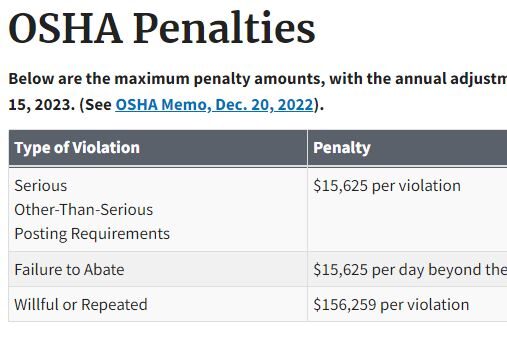
Visual Documentation Packages range from $3,000 to $16,000
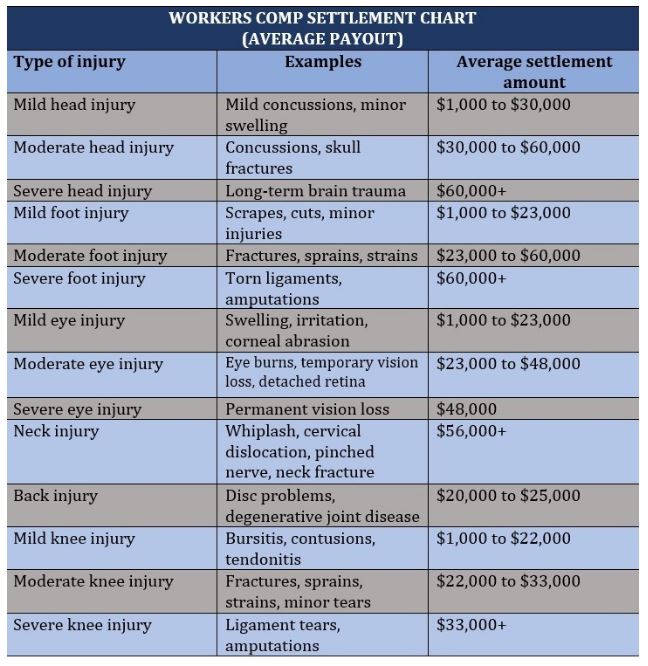
Benefit-Cost Analysis
Benefit-Cost Ratio (BCR) = Expected benefit (prevented expenses) / Expected cost (this program’s cost).
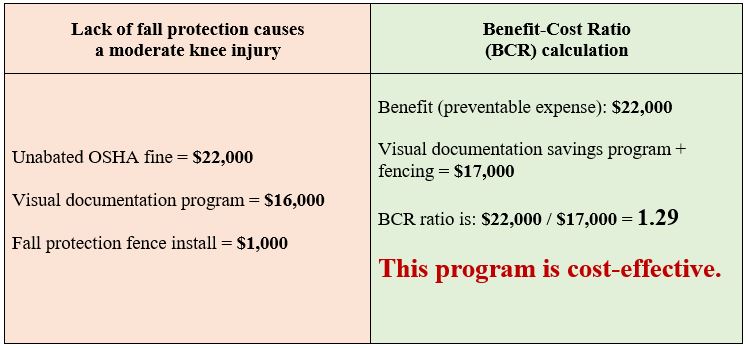
The program is considered cost-effective if the BCR is 1.0 or greater.
Consider this “Fall” scenario:
Consider this “Rework” scenario:
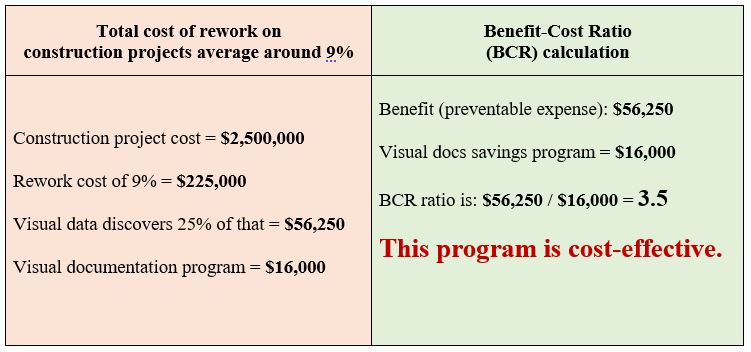
There is no accurate method to account for the total rework cost on construction projects. However, an article in the JOBSITE powered by PROCORE website states that the total cost of rework could be like 9% of the total project cost.
In conclusion, there are an endless number of scenarios that could be plugged into the BCR formula. Most will likely justify a visual documentation program.
