Safety Visualization
Construction safety awareness and compliance are critical aspects of managing construction projects. By using visual documentation, it can ensure the well-being of workers, compliance with regulations and the overall success of the project.
Here are some key elements relating to construction safety:
- Use visual documentation to show the location of first aid stations, fire extinguishers, evacuation routes, storm shelters, etc…
- Post your Emergency Response Plans throughout the worksite.

Monitoring compliance per local, state and federal safety regulations such as OSHA.
- Providing workers with proper safety training is crucial.
- A Safety Officer can use visual documents in training videos, virtual safety sessions and written safety procedures.
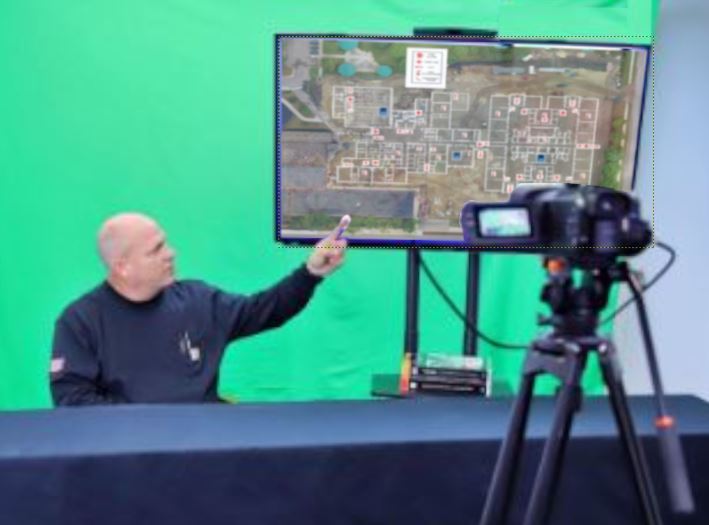
- The Safety Officer can benefit from using visual imagery as part of their Safety Program.
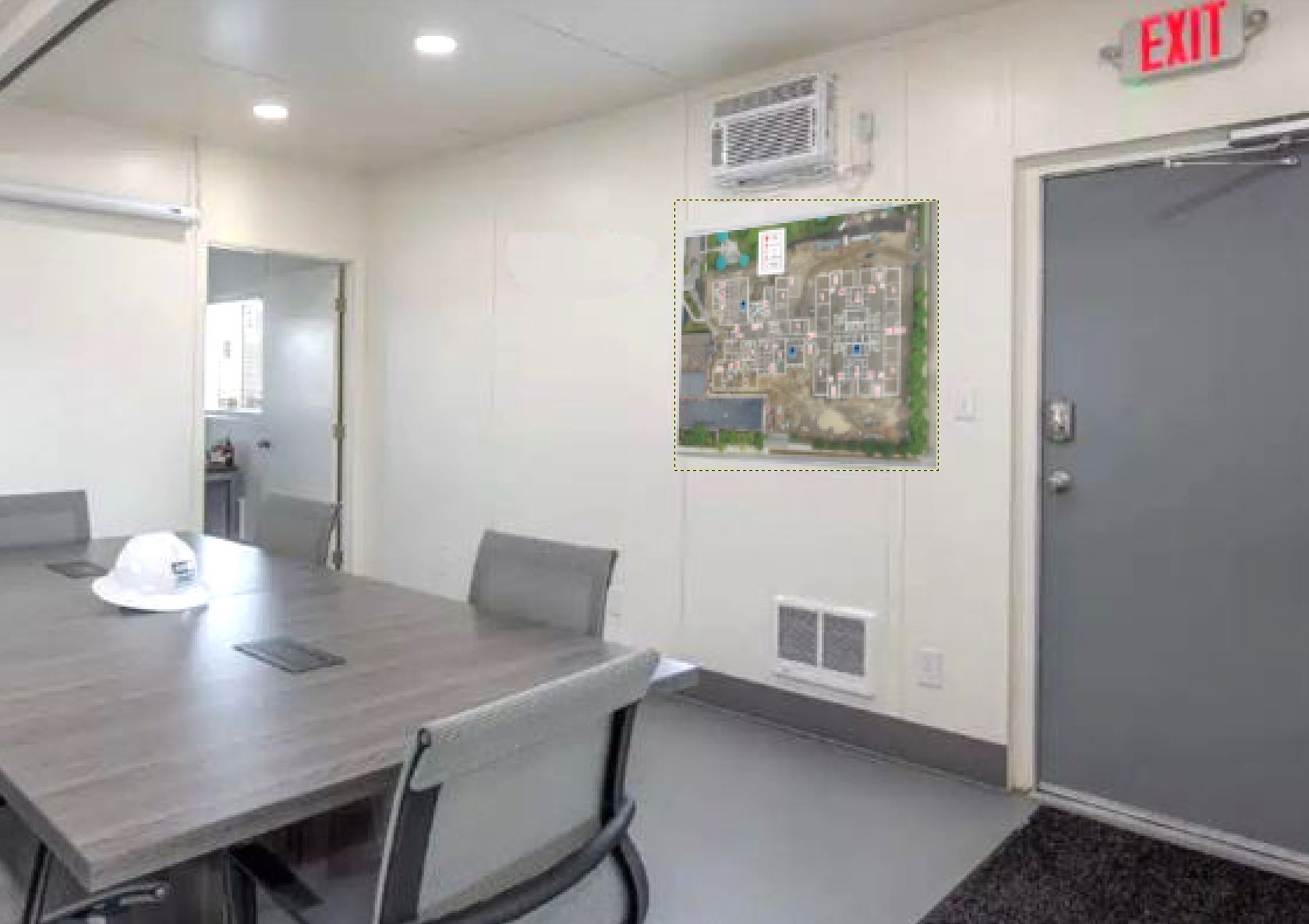
- Posting safety related visuals can be essential for compliance and accountability. For example, posting safety procedures on the wall of the construction trailer and entrances to the building.
- Bringing awareness to hazards on a jobsite can lead to fewer accidents.
- Visual images can highlight caution or danger areas as well as restricted areas to refrain from. (See map below)
- Regular inspections of the construction site help identify potential hazards, ensure compliance with safety protocols and address issues promptly.
- The inspection process as performed by the Safety Officer:
- Current process: A typical walkthrough inspection is infrequent and is limited to what can be seen and photographed.
- Improved process: Perform a remote inspection of the jobsite at any time using visual documents to get a more in-depth perspectives using aerial and immersive 360o photos.
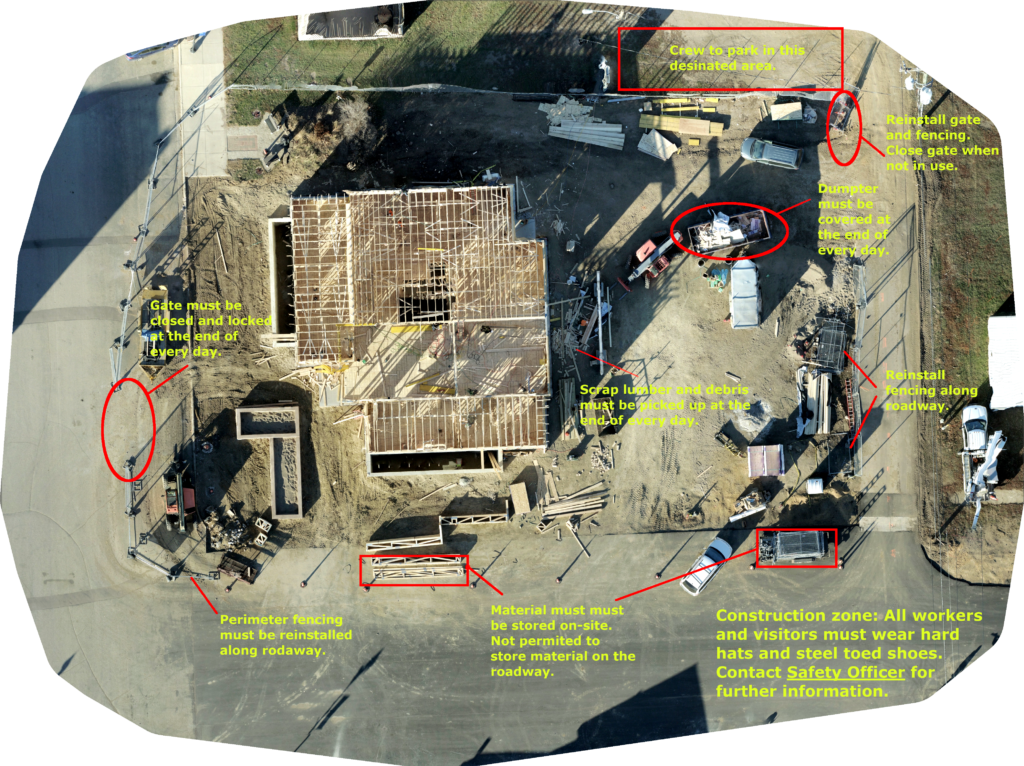
Orthomosaic 2D photo marked up and used for training purposes to bring awareness to potential safety hazards that were identified on September 23, 2023.
Construction Risk Assessment
A construction risk assessment aims to identify dangerous factors on the construction site. Using visual documentation can aid in the identification of hazards and be included as a supplement in corrective action reports.
By combining safety compliance measures with visual documentation, construction projects can become a safer working environment, reduce the risk of accidents, and ensure regulatory adherence. Regular training, communication and a proactive approach to safety are essential components for construction safety management.
